
Risks & Opportunities Manager
Move from defensive risk-tracking to strategic resilience. Quantify the financial and operational impact of ESG variables in real-time.
In a volatile global market, ESG risk is business risk. myConsole’s Risks & Opportunities Manager provides a robust, customisable digital register to identify, mitigate, and manage risks across your entire project portfolio.
Don’t just track threats—uncover opportunities. Our platform enables you to move beyond traditional financial-only risk models to build comprehensive resilience across every ESG dimension, ensuring your organisation is prepared for both regulatory shifts and operational disruptions.
Systemic Risk Governance & Control
Our manager provides a continuous, systemic approach for your entire team to manage the "Double Materiality" of your ESG strategy. This approach is essential as it ensures that every identified factor is linked to a specific owner and a verified mitigation plan. For instance, in implementing this strategy, organizations can effectively identify the environmental and social risks associated with their operations. By utilising data analytics and stakeholder feedback, our manager can help prioritise these risks based on their potential impact and likelihood, ensuring that resources are allocated efficiently. Furthermore, the integration of sustainability metrics into the decision-making framework enhances transparency and accountability, fostering a culture of responsibility within the organisation.
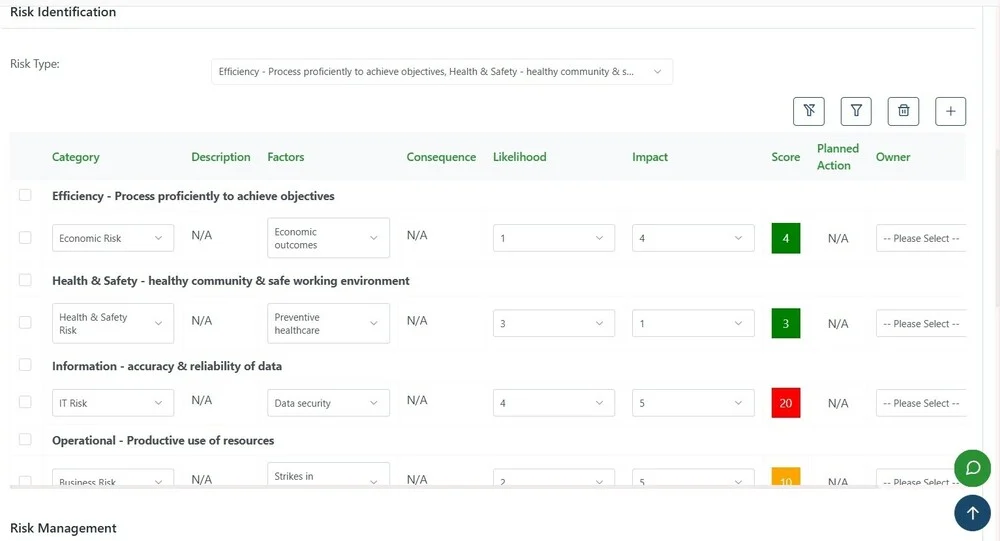
Dynamic Risk & Control Register
Record and manage all identified factors, consequences, and likelihoods. This live register tracks the potential impact on project outcomes, deliverables, and wider business operations.
Real-Time Opportunity Scoring
ESG isn't just about avoiding downsides. Our system provides real-time scores for identified opportunities, enabling you to improve your ESG capabilities and gain a competitive edge.
Automated Risk Mitigation Monitoring
Ensure consistent, acceptable decision-making with automated monitoring of risk controls. Linked directly to real-time dashboards, you gain full visibility of risks specific to internal, external, or materiality projects.
Financial Impact Quantification
Include potential and actual costs within your risk management. By linking risk to the bottom line, you can develop prioritised implementation plans based on financial and strategic urgency.
Strategic Benefits of Resilience Management
Understanding the strategic benefits of resilience management is paramount for organizations aiming to thrive in a volatile market. Resilience management extends beyond risk mitigation; it encompasses the ability to adapt and respond to unforeseen challenges. A well-implemented resilience strategy not only safeguards against potential losses but also positions organizations to capitalize on new market opportunities. For example, businesses that actively engage in community resilience initiatives can strengthen their local ties and enhance their brand image, ultimately driving customer loyalty and trust.
Additionally, resilience management fosters innovation by encouraging organizations to rethink their operational strategies. This can lead to the development of new products and services that align with evolving market demands. For instance, companies that prioritize sustainability may discover opportunities to create eco-friendly products that resonate with environmentally-conscious consumers. By integrating resilience into their core business strategies, organizations can ensure long-term viability while contributing positively to society and the planet.
Enhanced Corporate Resilience
Protect your reputation and operational stability by addressing ESG variables before they escalate into financial liabilities.
Personalised Accountability
Allocate risk-mitigation activities to specific owners with planned actions and firm completion dates, tracked via personalised user dashboards.
Comprehensive Portfolio Coverage
Manage risks across individual projects or entire programmes, such as your multi-year ESG Roadmap.
Risk Report Generator
Instantly produce professional risk and opportunity reports for the Board, investors, and regulatory bodies, providing a clear narrative of your defensive and proactive strategy.
Prioritised Action Planning
Use real-time data to act on the most critical threats first, ensuring resources are allocated where they are needed most to protect the organisation.